Marketing and Discount

Price Anchoring: What is Price Anchoring & Anchor Benefit?

Mateo Rossini
|
November 17, 2025

Have you ever walked into a store and seen a product with a hefty price tag crossed out, replaced by a significantly lower “discounted” price? That instant rush of feeling like you’ve found a steal is a powerful sensation. That’s the price anchoring effect in action, A mind game.

It has been quietly influencing our buying decisions for decades. In this article, we will explore price anchoring meaning and examples. We will explain how it works and why it is effective. No matter if you're running a business, diving into marketing, or just interested in how pricing psychology works, there's likely something here for you.

So, let’s get started!

What is Price Anchoring?

Anchor Pricing Definition: Anchor pricing is a marketing strategy where a high initial price is presented as a reference point, creating an "anchor" in the consumer's mind. This makes any lower prices that come after it seem like a better deal.

Essentially, the idea is to set a high bar that makes subsequent offers look more appealing by comparison.

Is Price Anchoring Ethical?

Price anchoring isn’t automatically unethical. When your reference prices are real and reasonable, it can actually help customers make smarter buying decisions. The problem comes when anchors are exaggerated or misleading—then it starts to feel manipulative and can hurt trust. The key is transparency: use anchor prices as a fair comparison point, not just a trick to make discounts look bigger. Done right, anchoring guides choices without compromising honesty.

Price Anchoring Psychology

The magic behind price anchoring lies in how our brains process information. When we see a high anchor price, our perception of value shifts.

Imagine a luxury handbag priced at $1,000 sitting next to a similar bag priced at $300. The $1,000 tag isn’t there just to sell the expensive bag—it’s there to make the $300 option look like a bargain.

Behavioral economists Amos Tversky and Daniel Kahneman, pioneers in decision-making psychology, discovered that anchoring works because we unconsciously adjust our expectations based on the first piece of information presented. Even when we try to ignore it, the anchor sneaks into our judgment, shaping how we view other options.

Check out our resources on the psychology of discounts and psychological pricing strategies.

What Is the Defining Characteristic of Price Anchoring?

Price anchoring is all about how the initial price you see can shape your decisions without you even noticing it. Unlike hard-sell tactics that push you into a corner, anchoring operates more quietly, helping guide your choices in a subtle way. When you first see a price, it creates a frame of reference for everything else you consider, making it easier to decide what to buy next.

For businesses, this means strategically placing anchor prices to guide buyers toward desired outcomes. Whether it’s highlighting a premium option to make mid-tier products look more appealing or using “was/now” pricing to emphasize savings, anchoring is a tool that works in almost any scenario.

Types of Price Anchoring

Price anchoring can take many forms, each influencing how customers perceive value and make purchasing decisions. Here are the main types commonly used in e-commerce:

1. Strikethrough Pricing

This classic technique shows the original price crossed out next to a lower, current price. It instantly signals a deal to the customer. For example, if a pair of sneakers was $120 and is now $90, showing the $120 crossed out makes the $90 feel like a bargain. Shopify merchants can automate this with tools like Discounty to display strikethrough prices consistently across products.

2. High Price Anchor

Placing a high-priced product next to a mid-range option makes the mid-range choice appear more reasonable and appealing. For instance, a $300 leather jacket displayed next to a $150 jacket makes the $150 option feel like a smart deal.

3. Low Price Anchor

Conversely, showing a very low-priced product can make other options seem better in comparison. If a cheap version looks low-quality, customers are nudged toward slightly more expensive alternatives, which still feel like a good value.

4. Tiered Pricing

Offering multiple versions of a product or service at different price points, often labeled “Most Popular” or “Best Value,” helps guide customer choice. This method encourages buyers to pick the option you want to highlight, usually the middle tier.

Read More: Tier Pricing Strategy

5. Competitor-Based Anchoring

Showing your prices in comparison to competitors’ pricing can reinforce value. For example, “Other stores charge $120, we offer it for $95” clearly positions your product as a better deal.

6. Comparative Package Pricing

Bundling products or services and presenting different price packages can make one option stand out as the “best value.” Typically, the middle bundle appears most attractive. This is especially effective in Shopify stores, where apps like Discounty can automatically calculate and display bundle pricing and savings.

When Should Price Anchoring Be Used?

A common question is: we understand that this strategy works but when is price anchoring used? Price anchoring shines in situations where customers lack a clear reference point. Think of new product launches, seasonal sales, or industries with wide price ranges, like luxury goods or software subscriptions.

For example, when a company introduces a high-end smartphone priced at $1,200 alongside a mid-range model for $800, the anchor price makes the $800 option seem like a smart choice, even though it’s still expensive.

Anchoring also thrives during major sales events like Black Friday. By displaying original prices next to heavily discounted ones, businesses tap into the psychology of urgency and savings, driving customers to act quickly.

Don’t miss how anchoring transforms sales during Black Friday pricing strategies.

What Is the Shortcoming of Price Anchoring?

Price anchoring isn’t foolproof. When the anchor price feels unrealistic or inflated, customers may lose trust. Nobody likes feeling manipulated, and an overly aggressive anchor can backfire, making customers skeptical of the value being offered.

To avoid this, businesses must balance credibility with strategy. Anchors should feel believable and be supported by clear benefits or features that justify the price difference.

Price Anchoring Examples in Action

Here are a number of companies that use price anchoring:

  • Apple: At the launch of the first iPad, Steve Jobs displayed a $999 price tag on the screen before revealing the actual price of $499. The initial $999 served as an anchor, making $499 seem like a bargain. The result? A wildly successful launch that set the stage for the iPad’s dominance.
  • Amazon: Ever noticed how Amazon always shows a “list price” crossed out next to the sale price? That’s anchoring at work. By comparing the sale price to a higher original price, Amazon creates the perception of value, even if the list price is rarely what people would pay.
  • Luxury Brands: High-end companies like Gucci or Rolex set their anchor prices high to establish a sense of exclusivity and quality. Even their more “affordable” products carry a premium price, which seems reasonable when compared to their flagship items.

These companies show how versatile anchoring can be, whether it’s creating a perception of savings or reinforcing a premium brand image.

Advanced Strategies for Leveraging Price Anchoring

Let’s explore some advanced techniques to maximize its effectiveness and make your pricing strategies truly stand out.

Comparative Pricing

One of the simplest and most effective anchoring strategies is comparative pricing. By showing the original price alongside the discounted price, businesses create a clear reference point.

Example:

  • Was $200 → Now $100
  • This format highlights the savings while making the discounted price look irresistible.

Product Bundling

Why sell one product when you can sell three? Bundling items together and presenting a higher standalone price as the anchor makes the bundle look like a steal.

  • Example: “Get a single item for $50 or a 3-pack for just $120!”

Dynamic Pricing Packages

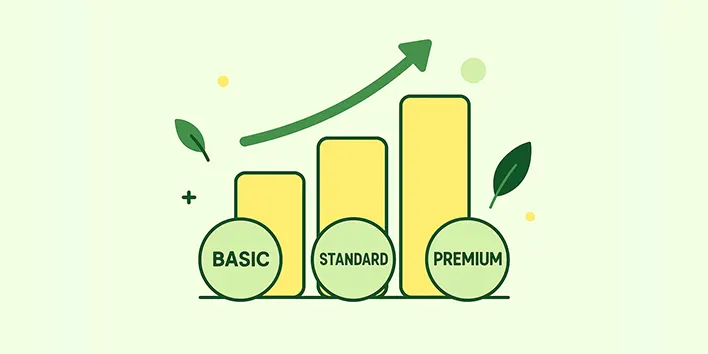
Tiered pricing—think Basic, Standard, and Premium plans—is a go-to strategy for SaaS companies. The highest-priced package anchors value, making mid-tier options appear more reasonable.

Popup Anchoring

Popups showing limited-time deals with high anchor prices can create urgency and highlight savings.

  • Example: “Original Price: $500. Limited Offer: $350 (Save $150).”

Strategy Customer Impact Example
Display Original Price Creates a sense of value Was $200 → Now $100
Bundle Pricing Increases purchase appeal 1 item $50, 3 for $120
Timed Discounts Builds urgency “24-hour discount only”

Common Mistakes in Price Anchoring

Even a powerful tool like anchoring can misfire if not used thoughtfully. Here are common pitfalls to avoid:

  • Overpricing Anchors: Setting an anchor price too high can backfire, making customers question your credibility. If you’re selling a product that costs $50, anchoring it at $500 will raise red flags instead of increasing sales.
  • Uniform Application: Using the same anchoring strategy for all products can dilute its impact. What works for a premium product might not resonate with budget-conscious customers.
  • Neglecting Customer Perception: Anchoring only works if customers trust the value being offered. Transparency is critical—clearly explain why the anchor price is justified.

By avoiding these mistakes, businesses can maximize the benefits of anchoring while maintaining trust and credibility.

Is Price Anchoring Legal?

A question that often comes up is whether price anchoring is illegal. “Is Price Anchoring Illegal?

Price anchoring is perfectly legal when done transparently, but it walks a fine ethical line. The primary issue arises when businesses inflate original prices to make discounts seem more significant than they truly are.

The EU Price Indication Directive, enforced in 2022, addresses this issue directly. It requires businesses to display the lowest price within the past 30 days as the anchor during a sale. This regulation aims to ensure that discounts are genuine and prevent misleading practices.

In the U.S., the Federal Trade Commission (FTC) also monitors pricing practices to protect consumers. Retailers found guilty of inflating anchor prices face fines and reputational damage. For instance, a popular online retailer faced lawsuits for showing inflated "list prices" to exaggerate discounts.

For ethical anchoring, stick to these best practices:

  • Use genuine historical prices as anchors.
  • Clearly communicate why the anchor price exists (e.g., premium features or limited-time offers).
  • Ensure discounts are meaningful and not just a way to manipulate customers.

By maintaining transparency, businesses can leverage price anchoring effectively while building customer trust.

What Is Reverse Price Anchoring?

Reverse price anchoring flips the concept on its head. Instead of starting with a high price to make subsequent options seem cheaper, this strategy introduces a low initial price to highlight premium or high-value options.

Pros and Cons of Reverse Price Anchoring

Pros Cons
Makes premium products more appealing May undervalue budget offerings
Attracts budget-conscious customers Requires careful price justification
Useful for tiered pricing strategies Less effective for luxury markets

Example:
Imagine a subscription service with a $10/month basic plan and a $30/month premium plan. By introducing the basic plan first, businesses anchor customers to a low price, making the premium option seem like a worthwhile upgrade.

Reverse price anchoring works best when targeting customers who prioritize value over exclusivity, such as in software subscriptions or freemium models.

Anchoring vs. Reverse Anchoring

Here’s how standard anchoring and reverse anchoring stack up:

Aspect Standard Price Anchoring Reverse Price Anchoring
Definition High initial price creates a reference point, making lower prices seem more appealing. Low initial price highlights the value of premium options.
Target Audience Works well for luxury markets and high-ticket items. Ideal for value-conscious customers and freemium models.
Primary Use Case Highlighting discounts, product bundles, and tiered plans. Upselling premium services from a basic plan.
Advantages Creates a sense of exclusivity and perceived savings. Attracts budget-conscious buyers while promoting upgrades.
Limitations Can backfire if the anchor price seems unrealistic. May undervalue entry-level options if not positioned carefully.

Implementing Price Anchoring in Your Business: 8 steps

Price anchoring can be a powerful tool when done thoughtfully. Follow these steps to create a strategy that boosts sales and builds trust with your customers.

1. Know Your Audience Inside Out

Before setting any anchor prices, identify who your ideal customers are and what motivates their purchases. Look at past behavior, demographics, and shopping patterns. Using tools like Shopify’s customer analytics or CRM data, you can segment your audience and tailor anchors to resonate with each group.

2. Understand the Market Landscape

Research competitors’ prices and evaluate how your product compares in terms of value. The goal isn’t to undercut rivals but to position your pricing strategically. Factor in production costs, distribution, and perceived value to ensure your anchors feel fair and compelling.

3. Define Clear Objectives

Decide what you want price anchoring to achieve. Are you aiming to increase short-term sales, encourage larger purchases, or improve customer loyalty? Your goal will guide how you set anchors, discounts, and related offers.

4. Align Your Team

Your sales and marketing teams should fully understand the strategy and the reasoning behind anchor prices. When the team communicates value consistently, customers are more likely to trust the pricing and engage confidently.

5. Launch Anchors Strategically

Choose where and when to display anchor prices for maximum effect. On Shopify, this could mean product pages, pop-ups, or promotional banners. Coordinating marketing and sales ensures a seamless customer experience. Apps like Discounty can automate price displays and make updates easier.

6. Make Anchors Stand Out

Visual presentation matters. Clearly highlight the anchor price alongside the actual selling price. Effective design draws attention, making the savings immediately obvious and increasing perceived value.

7. Experiment and Refine

Try different anchor points, formats, and placement strategies to see what resonates with customers. A/B testing can show which options drive higher conversions, larger carts, or increased engagement.

8. Track Results and Adapt

Monitor performance using sales data and customer insights. Adjust anchor prices as needed to maximize impact. Tools like Shopify analytics and Discounty can help you track results in real time and tweak your strategy for ongoing success.

How Discounty Helps You Apply Price Anchoring

Discounty makes implementing price anchoring strategies effortless for Shopify store owners. Here’s how it supports your success:

  • Dynamic Pricing Tools: Automatically set and display anchor prices, ensuring they remain relevant and competitive.
  • Pre-Designed Templates: Showcase original and discounted prices with visually appealing templates.
  • Real-Time Analytics: Track the effectiveness of your anchoring strategies and make data-driven adjustments.
  • Customizable Campaigns: Tailor price anchoring for specific products, collections, or customer segments.

For instance, with Discounty, you can create a tiered pricing structure with just a few clicks, ensuring your mid-tier options always look like the best deal. Want to learn how it works? Try Discounty free today!

Conclusion: Wrapping Up the Power of Price Anchoring

Price anchoring is more than just a clever pricing strategy. It’s a way to align customer perception with your product’s value. When you highlight discounts, bundle products together, or use tiered pricing, you're using a technique called anchoring. This strategy really helps buyers feel more confident about their purchasing choices.

However, with great power comes responsibility. Anchoring only works when it’s transparent, ethical, and tailored to your audience. Use it wisely to build trust, enhance value perception, and ultimately, boost your sales.

Ready to supercharge your sales strategy? Start experimenting with price anchoring today and see how tools like Discounty can make the process seamless.

FAQ About Price Anchoring

1. How does price anchoring influence customer decisions?
Price anchoring works by giving customers a reference point to compare other prices. For example, showing the original higher price crossed out next to a lower price makes the discounted price feel like a great deal. This taps into human psychology and encourages quicker purchasing decisions.

2. Is using price anchoring ethical?
Yes, as long as it’s transparent. Price anchoring is generally legal and ethical, but it can be misleading if the original “anchor” price is inflated or false. Always use real past prices or legitimate reference points to maintain trust with your customers.

3. Can price anchoring backfire?
Absolutely. If the anchor price is set too high or used inconsistently across products, it can erode customer trust. Overuse of the tactic can also reduce its effectiveness, making discounts seem less compelling over time.

4. Is price anchoring legal?
Yes, generally. Laws mainly require that the anchor price is a truthful reference, such as a previous selling price or a genuine competitor price. Misrepresenting an anchor price can lead to regulatory issues in some countries.

Price Anchoring: What is Price Anchoring & Anchor Benefit?

Mateo Rossini
|
November 17, 2025
Marketing and Discount

Have you ever walked into a store and seen a product with a hefty price tag crossed out, replaced by a significantly lower “discounted” price? That instant rush of feeling like you’ve found a steal is a powerful sensation. That’s the price anchoring effect in action, A mind game.

It has been quietly influencing our buying decisions for decades. In this article, we will explore price anchoring meaning and examples. We will explain how it works and why it is effective. No matter if you're running a business, diving into marketing, or just interested in how pricing psychology works, there's likely something here for you.

So, let’s get started!

What is Price Anchoring?

Anchor Pricing Definition: Anchor pricing is a marketing strategy where a high initial price is presented as a reference point, creating an "anchor" in the consumer's mind. This makes any lower prices that come after it seem like a better deal.

Essentially, the idea is to set a high bar that makes subsequent offers look more appealing by comparison.

Is Price Anchoring Ethical?

Price anchoring isn’t automatically unethical. When your reference prices are real and reasonable, it can actually help customers make smarter buying decisions. The problem comes when anchors are exaggerated or misleading—then it starts to feel manipulative and can hurt trust. The key is transparency: use anchor prices as a fair comparison point, not just a trick to make discounts look bigger. Done right, anchoring guides choices without compromising honesty.

Price Anchoring Psychology

The magic behind price anchoring lies in how our brains process information. When we see a high anchor price, our perception of value shifts.

Imagine a luxury handbag priced at $1,000 sitting next to a similar bag priced at $300. The $1,000 tag isn’t there just to sell the expensive bag—it’s there to make the $300 option look like a bargain.

Behavioral economists Amos Tversky and Daniel Kahneman, pioneers in decision-making psychology, discovered that anchoring works because we unconsciously adjust our expectations based on the first piece of information presented. Even when we try to ignore it, the anchor sneaks into our judgment, shaping how we view other options.

Check out our resources on the psychology of discounts and psychological pricing strategies.

What Is the Defining Characteristic of Price Anchoring?

Price anchoring is all about how the initial price you see can shape your decisions without you even noticing it. Unlike hard-sell tactics that push you into a corner, anchoring operates more quietly, helping guide your choices in a subtle way. When you first see a price, it creates a frame of reference for everything else you consider, making it easier to decide what to buy next.

For businesses, this means strategically placing anchor prices to guide buyers toward desired outcomes. Whether it’s highlighting a premium option to make mid-tier products look more appealing or using “was/now” pricing to emphasize savings, anchoring is a tool that works in almost any scenario.

Types of Price Anchoring

Price anchoring can take many forms, each influencing how customers perceive value and make purchasing decisions. Here are the main types commonly used in e-commerce:

1. Strikethrough Pricing

This classic technique shows the original price crossed out next to a lower, current price. It instantly signals a deal to the customer. For example, if a pair of sneakers was $120 and is now $90, showing the $120 crossed out makes the $90 feel like a bargain. Shopify merchants can automate this with tools like Discounty to display strikethrough prices consistently across products.

2. High Price Anchor

Placing a high-priced product next to a mid-range option makes the mid-range choice appear more reasonable and appealing. For instance, a $300 leather jacket displayed next to a $150 jacket makes the $150 option feel like a smart deal.

3. Low Price Anchor

Conversely, showing a very low-priced product can make other options seem better in comparison. If a cheap version looks low-quality, customers are nudged toward slightly more expensive alternatives, which still feel like a good value.

4. Tiered Pricing

Offering multiple versions of a product or service at different price points, often labeled “Most Popular” or “Best Value,” helps guide customer choice. This method encourages buyers to pick the option you want to highlight, usually the middle tier.

Read More: Tier Pricing Strategy

5. Competitor-Based Anchoring

Showing your prices in comparison to competitors’ pricing can reinforce value. For example, “Other stores charge $120, we offer it for $95” clearly positions your product as a better deal.

6. Comparative Package Pricing

Bundling products or services and presenting different price packages can make one option stand out as the “best value.” Typically, the middle bundle appears most attractive. This is especially effective in Shopify stores, where apps like Discounty can automatically calculate and display bundle pricing and savings.

When Should Price Anchoring Be Used?

A common question is: we understand that this strategy works but when is price anchoring used? Price anchoring shines in situations where customers lack a clear reference point. Think of new product launches, seasonal sales, or industries with wide price ranges, like luxury goods or software subscriptions.

For example, when a company introduces a high-end smartphone priced at $1,200 alongside a mid-range model for $800, the anchor price makes the $800 option seem like a smart choice, even though it’s still expensive.

Anchoring also thrives during major sales events like Black Friday. By displaying original prices next to heavily discounted ones, businesses tap into the psychology of urgency and savings, driving customers to act quickly.

Don’t miss how anchoring transforms sales during Black Friday pricing strategies.

What Is the Shortcoming of Price Anchoring?

Price anchoring isn’t foolproof. When the anchor price feels unrealistic or inflated, customers may lose trust. Nobody likes feeling manipulated, and an overly aggressive anchor can backfire, making customers skeptical of the value being offered.

To avoid this, businesses must balance credibility with strategy. Anchors should feel believable and be supported by clear benefits or features that justify the price difference.

Price Anchoring Examples in Action

Here are a number of companies that use price anchoring:

  • Apple: At the launch of the first iPad, Steve Jobs displayed a $999 price tag on the screen before revealing the actual price of $499. The initial $999 served as an anchor, making $499 seem like a bargain. The result? A wildly successful launch that set the stage for the iPad’s dominance.
  • Amazon: Ever noticed how Amazon always shows a “list price” crossed out next to the sale price? That’s anchoring at work. By comparing the sale price to a higher original price, Amazon creates the perception of value, even if the list price is rarely what people would pay.
  • Luxury Brands: High-end companies like Gucci or Rolex set their anchor prices high to establish a sense of exclusivity and quality. Even their more “affordable” products carry a premium price, which seems reasonable when compared to their flagship items.

These companies show how versatile anchoring can be, whether it’s creating a perception of savings or reinforcing a premium brand image.

Advanced Strategies for Leveraging Price Anchoring

Let’s explore some advanced techniques to maximize its effectiveness and make your pricing strategies truly stand out.

Comparative Pricing

One of the simplest and most effective anchoring strategies is comparative pricing. By showing the original price alongside the discounted price, businesses create a clear reference point.

Example:

  • Was $200 → Now $100
  • This format highlights the savings while making the discounted price look irresistible.

Product Bundling

Why sell one product when you can sell three? Bundling items together and presenting a higher standalone price as the anchor makes the bundle look like a steal.

  • Example: “Get a single item for $50 or a 3-pack for just $120!”

Dynamic Pricing Packages

Tiered pricing—think Basic, Standard, and Premium plans—is a go-to strategy for SaaS companies. The highest-priced package anchors value, making mid-tier options appear more reasonable.

Popup Anchoring

Popups showing limited-time deals with high anchor prices can create urgency and highlight savings.

  • Example: “Original Price: $500. Limited Offer: $350 (Save $150).”

Strategy Customer Impact Example
Display Original Price Creates a sense of value Was $200 → Now $100
Bundle Pricing Increases purchase appeal 1 item $50, 3 for $120
Timed Discounts Builds urgency “24-hour discount only”

Common Mistakes in Price Anchoring

Even a powerful tool like anchoring can misfire if not used thoughtfully. Here are common pitfalls to avoid:

  • Overpricing Anchors: Setting an anchor price too high can backfire, making customers question your credibility. If you’re selling a product that costs $50, anchoring it at $500 will raise red flags instead of increasing sales.
  • Uniform Application: Using the same anchoring strategy for all products can dilute its impact. What works for a premium product might not resonate with budget-conscious customers.
  • Neglecting Customer Perception: Anchoring only works if customers trust the value being offered. Transparency is critical—clearly explain why the anchor price is justified.

By avoiding these mistakes, businesses can maximize the benefits of anchoring while maintaining trust and credibility.

Is Price Anchoring Legal?

A question that often comes up is whether price anchoring is illegal. “Is Price Anchoring Illegal?

Price anchoring is perfectly legal when done transparently, but it walks a fine ethical line. The primary issue arises when businesses inflate original prices to make discounts seem more significant than they truly are.

The EU Price Indication Directive, enforced in 2022, addresses this issue directly. It requires businesses to display the lowest price within the past 30 days as the anchor during a sale. This regulation aims to ensure that discounts are genuine and prevent misleading practices.

In the U.S., the Federal Trade Commission (FTC) also monitors pricing practices to protect consumers. Retailers found guilty of inflating anchor prices face fines and reputational damage. For instance, a popular online retailer faced lawsuits for showing inflated "list prices" to exaggerate discounts.

For ethical anchoring, stick to these best practices:

  • Use genuine historical prices as anchors.
  • Clearly communicate why the anchor price exists (e.g., premium features or limited-time offers).
  • Ensure discounts are meaningful and not just a way to manipulate customers.

By maintaining transparency, businesses can leverage price anchoring effectively while building customer trust.

What Is Reverse Price Anchoring?

Reverse price anchoring flips the concept on its head. Instead of starting with a high price to make subsequent options seem cheaper, this strategy introduces a low initial price to highlight premium or high-value options.

Pros and Cons of Reverse Price Anchoring

Pros Cons
Makes premium products more appealing May undervalue budget offerings
Attracts budget-conscious customers Requires careful price justification
Useful for tiered pricing strategies Less effective for luxury markets

Example:
Imagine a subscription service with a $10/month basic plan and a $30/month premium plan. By introducing the basic plan first, businesses anchor customers to a low price, making the premium option seem like a worthwhile upgrade.

Reverse price anchoring works best when targeting customers who prioritize value over exclusivity, such as in software subscriptions or freemium models.

Anchoring vs. Reverse Anchoring

Here’s how standard anchoring and reverse anchoring stack up:

Aspect Standard Price Anchoring Reverse Price Anchoring
Definition High initial price creates a reference point, making lower prices seem more appealing. Low initial price highlights the value of premium options.
Target Audience Works well for luxury markets and high-ticket items. Ideal for value-conscious customers and freemium models.
Primary Use Case Highlighting discounts, product bundles, and tiered plans. Upselling premium services from a basic plan.
Advantages Creates a sense of exclusivity and perceived savings. Attracts budget-conscious buyers while promoting upgrades.
Limitations Can backfire if the anchor price seems unrealistic. May undervalue entry-level options if not positioned carefully.

Implementing Price Anchoring in Your Business: 8 steps

Price anchoring can be a powerful tool when done thoughtfully. Follow these steps to create a strategy that boosts sales and builds trust with your customers.

1. Know Your Audience Inside Out

Before setting any anchor prices, identify who your ideal customers are and what motivates their purchases. Look at past behavior, demographics, and shopping patterns. Using tools like Shopify’s customer analytics or CRM data, you can segment your audience and tailor anchors to resonate with each group.

2. Understand the Market Landscape

Research competitors’ prices and evaluate how your product compares in terms of value. The goal isn’t to undercut rivals but to position your pricing strategically. Factor in production costs, distribution, and perceived value to ensure your anchors feel fair and compelling.

3. Define Clear Objectives

Decide what you want price anchoring to achieve. Are you aiming to increase short-term sales, encourage larger purchases, or improve customer loyalty? Your goal will guide how you set anchors, discounts, and related offers.

4. Align Your Team

Your sales and marketing teams should fully understand the strategy and the reasoning behind anchor prices. When the team communicates value consistently, customers are more likely to trust the pricing and engage confidently.

5. Launch Anchors Strategically

Choose where and when to display anchor prices for maximum effect. On Shopify, this could mean product pages, pop-ups, or promotional banners. Coordinating marketing and sales ensures a seamless customer experience. Apps like Discounty can automate price displays and make updates easier.

6. Make Anchors Stand Out

Visual presentation matters. Clearly highlight the anchor price alongside the actual selling price. Effective design draws attention, making the savings immediately obvious and increasing perceived value.

7. Experiment and Refine

Try different anchor points, formats, and placement strategies to see what resonates with customers. A/B testing can show which options drive higher conversions, larger carts, or increased engagement.

8. Track Results and Adapt

Monitor performance using sales data and customer insights. Adjust anchor prices as needed to maximize impact. Tools like Shopify analytics and Discounty can help you track results in real time and tweak your strategy for ongoing success.

How Discounty Helps You Apply Price Anchoring

Discounty makes implementing price anchoring strategies effortless for Shopify store owners. Here’s how it supports your success:

  • Dynamic Pricing Tools: Automatically set and display anchor prices, ensuring they remain relevant and competitive.
  • Pre-Designed Templates: Showcase original and discounted prices with visually appealing templates.
  • Real-Time Analytics: Track the effectiveness of your anchoring strategies and make data-driven adjustments.
  • Customizable Campaigns: Tailor price anchoring for specific products, collections, or customer segments.

For instance, with Discounty, you can create a tiered pricing structure with just a few clicks, ensuring your mid-tier options always look like the best deal. Want to learn how it works? Try Discounty free today!

Conclusion: Wrapping Up the Power of Price Anchoring

Price anchoring is more than just a clever pricing strategy. It’s a way to align customer perception with your product’s value. When you highlight discounts, bundle products together, or use tiered pricing, you're using a technique called anchoring. This strategy really helps buyers feel more confident about their purchasing choices.

However, with great power comes responsibility. Anchoring only works when it’s transparent, ethical, and tailored to your audience. Use it wisely to build trust, enhance value perception, and ultimately, boost your sales.

Ready to supercharge your sales strategy? Start experimenting with price anchoring today and see how tools like Discounty can make the process seamless.

FAQ About Price Anchoring

1. How does price anchoring influence customer decisions?
Price anchoring works by giving customers a reference point to compare other prices. For example, showing the original higher price crossed out next to a lower price makes the discounted price feel like a great deal. This taps into human psychology and encourages quicker purchasing decisions.

2. Is using price anchoring ethical?
Yes, as long as it’s transparent. Price anchoring is generally legal and ethical, but it can be misleading if the original “anchor” price is inflated or false. Always use real past prices or legitimate reference points to maintain trust with your customers.

3. Can price anchoring backfire?
Absolutely. If the anchor price is set too high or used inconsistently across products, it can erode customer trust. Overuse of the tactic can also reduce its effectiveness, making discounts seem less compelling over time.

4. Is price anchoring legal?
Yes, generally. Laws mainly require that the anchor price is a truthful reference, such as a previous selling price or a genuine competitor price. Misrepresenting an anchor price can lead to regulatory issues in some countries.