
All about discount

Psychological Discount Strategies with 7+ Examples to Boost Sales

Mateo Rossini
|
December 21, 2025

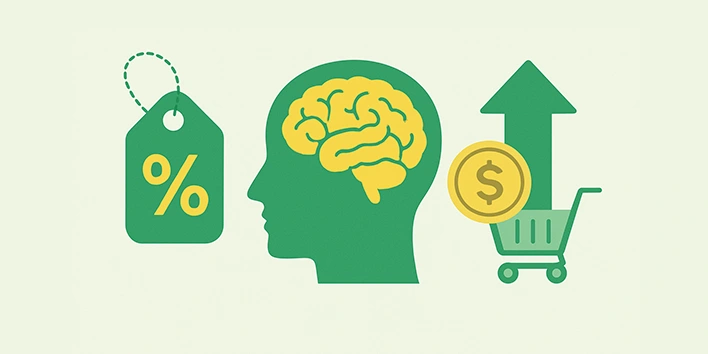
Ever walked into a store planning to buy just a single pair of socks and walked out with three shirts, a hat, and somehow a scented candle? We’ve all been there. You look at your receipt and ask yourself, What has happened? The answer isn't magic; it’s psychology. We do not even realize that our brains respond to some numbers, colors, and discount methods.

In this guide, we’ll explore exactly how these psychological discount strategies work and how you can use them to increase sales on your Shopify store.

What Are Psychological Pricing Strategies?

Psychological pricing is not just about numbers. Had prices been purely rational, a product priced at $19.99 and one priced at $20.00 would sell equally. As a matter of fact, that one cent usually makes a difference to a customer.

These strategies leverage cognitive biases, shortcuts our brains take to process information quickly. We do not always compute the exact prices when we are shopping, but we use our emotions, perception, and comparison.

For example, when we see a sign that says Was 50, Now 30, we get the impression that we have gained something, we have saved 20, and when we see a sign that says 30, we only feel that we have paid a price.

By understanding these triggers, businesses can frame their prices to highlight value, urgency, or exclusivity, making the decision to buy feel easier and more rewarding for the customer.

7 Powerful Psychological Pricing Strategies Examples

Ready to see how this works in practice? The following are seven effective strategies that large brands employ on a daily basis to persuade buyers, and you can employ them as well.

1 .Charm Pricing (The Power of 9)

Numbers are processed in our brains in a left-to-right manner. When you see $19.99, your brain registers the "1" first and categorizes the price in the "teens" or "$10 range." If you see $20.00, it instantly categorizes it as "$20."

That one-cent difference makes the price feel significantly lower. It’s why charm pricing is everywhere, from gas stations to gum at the checkout counter.

2. Price Anchoring

Imagine you’re shopping for a watch. You see one for $200. Is it a good deal? Hard to say. But if you see that same watch with a label that says "MSRP $350, Our Price $200," suddenly it looks like a steal.

This is price anchoring. The first price you see (the anchor) sets the standard against which all other prices are judged. By displaying a higher "original" price next to your selling price, you create a reference point that makes your offer look much more attractive. It frames the purchase as a smart financial decision; who doesn't love saving $150?

3. Bundle Pricing

Paying for things can technically register as "pain" in the brain. Seriously, spending money activates the same regions as physical discomfort. Bundle pricing or bundle discount reduces this pain by combining multiple items into a single transaction.

Instead of deciding to buy a burger ($8), then deciding to buy fries ($4), then deciding to buy a drink ($3), a "Meal Deal" for $13 makes the decision simple. You make one choice and get more value. This works brilliantly for skincare sets, gift baskets, or "starter kits" on Shopify stores, increasing your Average Order Value (AOV) while making the customer feel like they got a bargain.

Read More: Increase AOV with discount

4. The Decoy Effect

Have you ever been to the movies and stared at the popcorn prices? A small is $3, a medium is $6.50, and a large is $7. Most people look at the medium and think, "For just 50 cents more, I can get the large!"

That is the decoy effect in action. The medium size isn't there to be sold; it’s there to make the large size look like an unbeatable deal. Without the medium option, you might stick with the small. But the addition of a third, strategically priced "decoy" shifts your perspective and pushes you toward the more profitable option.

It’s a subtle way to guide customers toward the product you actually want them to buy.

5. Center Stage Effect

When faced with a row of options, our eyes are naturally drawn to the middle. Whether it's a lineup of products or a pricing table on a software site, the center option often feels like the "safe" choice; not too cheap, not too expensive, but just right.

Marketers call this the Center Stage Effect. You can leverage this by placing your most popular or highest-margin product in the middle of a display or pricing tier. Often, brands will highlight this option as "Most Popular" or "Best Value," reinforcing the idea that it is the smartest choice for the average buyer.

6. Pricing Psychology Magic Numbers and Ending in 7

We’ve talked about prices ending in 9, but what about pricing psychology ending in 7?

While 9 signals a bargain, numbers like 7 or 5 often stand out because they look precise and less "manufactured" than a standard .99 price tag.

In pricing psychology, magic numbers, odd numbers (1, 3, 5, 7, 9) are generally perceived as lower or more honest deals compared to even numbers, which can sometimes feel rounded up.

Some studies even suggest that prices ending in 7 catch the eye simply because they are less common. Using these "sharp" numbers can disrupt a customer’s scanning pattern and make them pause to consider the price.

7. Price Appearance and Design

Surprisingly, perception is influenced by the visual appearance of a price. A price that is written as 1400.00 appears bigger and more expensive than 1400. The visual weight of commas and decimals is perceived by our brains as more.

Removing currency symbols or unnecessary decimals, making the price look cleaner and smaller, can psychologically reduce the "pain of paying." It’s a simple design tweak, but one that can make a high-ticket item feel just a little more accessible.

Psychological Pricing Advantages and Disadvantages

Psychological pricing has both advantages and disadvantages. Consider them before remodeling your store.

The Advantages of Pricing Psychology

  • Simplifies Decision-Making: By framing prices clearly (like in tiered options), you reduce "analysis paralysis," making it easier for customers to choose.
  • Increases Attention and Sales: Strategies like charm pricing grab attention and have been shown to boost sales volume.
  • Competitive Advantage: Even a small price difference can make your offer appear superior to those of your competitors with the help of smart pricing.

Psychological Pricing Disadvantages

  • Risk of Eroding Trust: Customers who feel cheated or observe artificially inflated original prices may damage the reputation of your brand.
  • Training Customers to Wait: Customers can be trained to never pay full price by frequent sales, which is damaging to long-term margins.
  • Misperceived Value: A price that appears to be too low may indicate low quality to the customers.

Essential Psychological Discount Strategies in Marketing

So, how do you take these concepts and turn them into actionable marketing campaigns? It’s about more than just the price tag; it’s about the context in which that price is presented.

Artificial Time Constraints (Urgency)

"Sale ends in 2 hours!" Just reading that probably made your pulse quicken a little. That is the power of urgency. Psychological discount strategies in marketing often rely on artificial time constraints to trigger FOMO (Fear of Missing Out).

When a deal is permanent, shoppers take a long time before making a purchase, and in most cases, never come back. A countdown clock or a 24-hour Flash Sale sign makes the choice now, or it makes the passive browsers buyers. The pain of spending money is less than the fear of missing a deal.

The Rule of 100 (Percentage vs. Fixed Amount)

This is a golden rule for framing discounts. Should you offer 20% off or $5 off? The answer depends on the price of the item.

  • If the price is under $100: Use a percentage discount. 20% off a $25 shirt sounds way more impressive than $5 off, even though the math is the same.
  • If the price is over $100, a fixed dollar amount should be used. 50 off a 200 device will be significant to the customer compared to 25 off, which will require the customer to perform some mental calculations.

Adherence to this rule will make your discount look bigger and more valuable on the surface.

Exclusive and Tiered Discounts

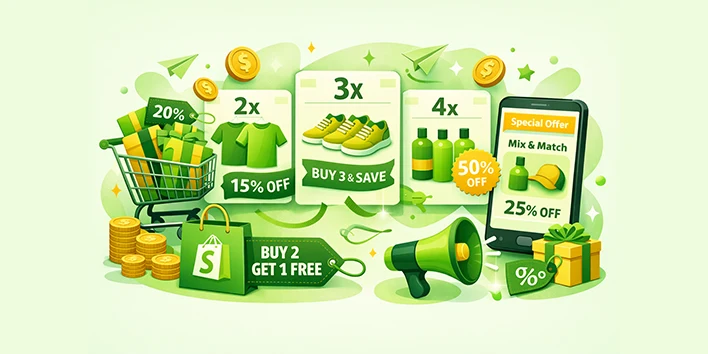
Rather than offering flat discounts, provide customers with an incentive to purchase more. Campaigns like "Buy 2 Get 10% Off" or "Buy 3 Get 20% Off" are brilliant psychological discounting examples.

Why? Because they gamify the shopping experience. The customer feels like they are "unlocking" a better deal by buying more. It shifts their mindset from "Do I need this?" to "If I add one more, I save money." This is a good way of increasing your average order value without undermining your brand.

Read More: What is tiered discount?

Innumeracy and BOGO Deals

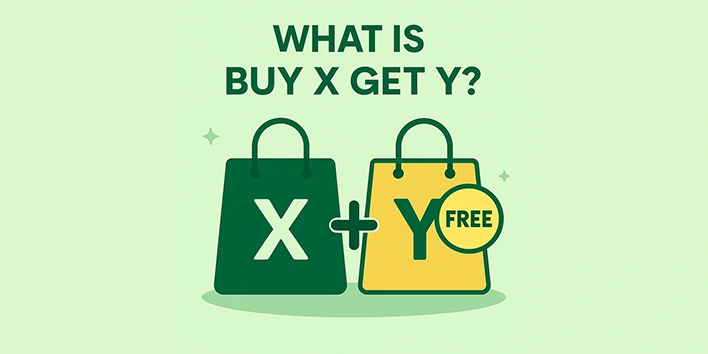
Humans are notoriously bad at intuitive math (a concept called "innumeracy"). We struggle to calculate percentages on the fly. That is why "Buy One Get One Free" (BOGO) is the king of retail promotions.

Ideally, "50% off when you buy two" is the exact same deal. But "Free" is a magic word. It implies zero cost and maximum gain. A BOGO deal feels like a gift, whereas a 50% discount feels like a calculation. Whenever possible, frame your offer in a way that minimizes math and maximizes the feeling of getting something for nothing.

Read More: What is BOGO discount?

How Discounty Helps You Implement These Strategies

Knowing these strategies is one thing; implementing them without breaking your website is another. If you’re running a Shopify store, manually creating tiered discounts or flash sales can be a logistical nightmare. This is where a tool like Discounty becomes your best friend.

Automating Tiered and Volume Discounts

Want to run a "Buy More, Save More" campaign? With Discounty, you can set up volume discounts in just a few clicks. You don’t need to code or hire a developer. You simply choose your tiers (e.g., Buy 2 get 10%, Buy 3 get 15%) and let the app handle the logic at checkout. It ensures the right discount applies automatically, creating a seamless experience for your customer.

Read More: What is automatic discount?

Adding Visual Urgency

Remember the power of urgency? Discounty lets you add countdown timers and sales badges directly to your product pages. These indicators remind the customers that the offer is time-based and motivate them to put items in the cart before the time elapses.

Read More: Limited-time offer discount

Seamless Campaign Management

Flash sales should begin and end on time. Discounty allows you to plan campaigns in advance. You can set a start and end date, and the system will automatically update your prices and discount badges on Shopify.

Practical Advice on How to Sell More on Your Shopify Store

You have the strategies and the tools; These are some final tips to assist them in working.

A/B Test Your Prices

Don’t just guess what works. Test it. Try pricing a product at $19.99 for a week, then $19.95 the next. Or test a BOGO offer against a 50% off discount. Real data from your specific audience will always beat general advice.

Use Visual Cues and Font Sizes

When displaying a sale price, make it larger and bolder than the original price. Use a color like red for the discount to grab attention. Visually diminishing the "cost" (original price) and highlighting the "benefit" (sale price) reinforces the value proposition.

Context is Key

Finally, remember your brand identity. When selling luxury products, it may appear cheap to use $9.99. Indicate quality using round numbers such as $100.

Conclusion

Pricing is more than just a number on a tag; it’s a conversation with your customer’s brain. By using psychological discount strategies like charm pricing, anchoring, and urgency, you can guide shoppers toward a purchase in a way that feels natural and rewarding for them.

When you’re ready to scale these campaigns up, tools like Discounty are there to make the execution effortless. So go ahead, experiment with your pricing, and watch your sales (and customer satisfaction) climb.

Frequently Asked Questions (FAQ)

1. What is the most effective psychological pricing strategy?

There is no single "best" strategy, as it depends on your product and audience. However, charm pricing (ending prices in 9) and price anchoring (showing a higher original price) are universally effective for most retail businesses.

2. Does charm pricing really work?

Yes. Research indicates that prices such as 19.99 are more effective than 20.00. The "left-digit effect" makes the price feel lower than it actually is.

3. Is psychological pricing unethical?

Not usually. Psychological pricing is a common marketing strategy. It is unethical when you lie, like inflating a fake original price to appear larger in order to make a discount appear larger. Be truthful to retain customers.

Psychological Discount Strategies with 7+ Examples to Boost Sales

Mateo Rossini
|
December 21, 2025
All about discount

Ever walked into a store planning to buy just a single pair of socks and walked out with three shirts, a hat, and somehow a scented candle? We’ve all been there. You look at your receipt and ask yourself, What has happened? The answer isn't magic; it’s psychology. We do not even realize that our brains respond to some numbers, colors, and discount methods.

In this guide, we’ll explore exactly how these psychological discount strategies work and how you can use them to increase sales on your Shopify store.

What Are Psychological Pricing Strategies?

Psychological pricing is not just about numbers. Had prices been purely rational, a product priced at $19.99 and one priced at $20.00 would sell equally. As a matter of fact, that one cent usually makes a difference to a customer.

These strategies leverage cognitive biases, shortcuts our brains take to process information quickly. We do not always compute the exact prices when we are shopping, but we use our emotions, perception, and comparison.

For example, when we see a sign that says Was 50, Now 30, we get the impression that we have gained something, we have saved 20, and when we see a sign that says 30, we only feel that we have paid a price.

By understanding these triggers, businesses can frame their prices to highlight value, urgency, or exclusivity, making the decision to buy feel easier and more rewarding for the customer.

7 Powerful Psychological Pricing Strategies Examples

Ready to see how this works in practice? The following are seven effective strategies that large brands employ on a daily basis to persuade buyers, and you can employ them as well.

1 .Charm Pricing (The Power of 9)

Numbers are processed in our brains in a left-to-right manner. When you see $19.99, your brain registers the "1" first and categorizes the price in the "teens" or "$10 range." If you see $20.00, it instantly categorizes it as "$20."

That one-cent difference makes the price feel significantly lower. It’s why charm pricing is everywhere, from gas stations to gum at the checkout counter.

2. Price Anchoring

Imagine you’re shopping for a watch. You see one for $200. Is it a good deal? Hard to say. But if you see that same watch with a label that says "MSRP $350, Our Price $200," suddenly it looks like a steal.

This is price anchoring. The first price you see (the anchor) sets the standard against which all other prices are judged. By displaying a higher "original" price next to your selling price, you create a reference point that makes your offer look much more attractive. It frames the purchase as a smart financial decision; who doesn't love saving $150?

3. Bundle Pricing

Paying for things can technically register as "pain" in the brain. Seriously, spending money activates the same regions as physical discomfort. Bundle pricing or bundle discount reduces this pain by combining multiple items into a single transaction.

Instead of deciding to buy a burger ($8), then deciding to buy fries ($4), then deciding to buy a drink ($3), a "Meal Deal" for $13 makes the decision simple. You make one choice and get more value. This works brilliantly for skincare sets, gift baskets, or "starter kits" on Shopify stores, increasing your Average Order Value (AOV) while making the customer feel like they got a bargain.

Read More: Increase AOV with discount

4. The Decoy Effect

Have you ever been to the movies and stared at the popcorn prices? A small is $3, a medium is $6.50, and a large is $7. Most people look at the medium and think, "For just 50 cents more, I can get the large!"

That is the decoy effect in action. The medium size isn't there to be sold; it’s there to make the large size look like an unbeatable deal. Without the medium option, you might stick with the small. But the addition of a third, strategically priced "decoy" shifts your perspective and pushes you toward the more profitable option.

It’s a subtle way to guide customers toward the product you actually want them to buy.

5. Center Stage Effect

When faced with a row of options, our eyes are naturally drawn to the middle. Whether it's a lineup of products or a pricing table on a software site, the center option often feels like the "safe" choice; not too cheap, not too expensive, but just right.

Marketers call this the Center Stage Effect. You can leverage this by placing your most popular or highest-margin product in the middle of a display or pricing tier. Often, brands will highlight this option as "Most Popular" or "Best Value," reinforcing the idea that it is the smartest choice for the average buyer.

6. Pricing Psychology Magic Numbers and Ending in 7

We’ve talked about prices ending in 9, but what about pricing psychology ending in 7?

While 9 signals a bargain, numbers like 7 or 5 often stand out because they look precise and less "manufactured" than a standard .99 price tag.

In pricing psychology, magic numbers, odd numbers (1, 3, 5, 7, 9) are generally perceived as lower or more honest deals compared to even numbers, which can sometimes feel rounded up.

Some studies even suggest that prices ending in 7 catch the eye simply because they are less common. Using these "sharp" numbers can disrupt a customer’s scanning pattern and make them pause to consider the price.

7. Price Appearance and Design

Surprisingly, perception is influenced by the visual appearance of a price. A price that is written as 1400.00 appears bigger and more expensive than 1400. The visual weight of commas and decimals is perceived by our brains as more.

Removing currency symbols or unnecessary decimals, making the price look cleaner and smaller, can psychologically reduce the "pain of paying." It’s a simple design tweak, but one that can make a high-ticket item feel just a little more accessible.

Psychological Pricing Advantages and Disadvantages

Psychological pricing has both advantages and disadvantages. Consider them before remodeling your store.

The Advantages of Pricing Psychology

  • Simplifies Decision-Making: By framing prices clearly (like in tiered options), you reduce "analysis paralysis," making it easier for customers to choose.
  • Increases Attention and Sales: Strategies like charm pricing grab attention and have been shown to boost sales volume.
  • Competitive Advantage: Even a small price difference can make your offer appear superior to those of your competitors with the help of smart pricing.

Psychological Pricing Disadvantages

  • Risk of Eroding Trust: Customers who feel cheated or observe artificially inflated original prices may damage the reputation of your brand.
  • Training Customers to Wait: Customers can be trained to never pay full price by frequent sales, which is damaging to long-term margins.
  • Misperceived Value: A price that appears to be too low may indicate low quality to the customers.

Essential Psychological Discount Strategies in Marketing

So, how do you take these concepts and turn them into actionable marketing campaigns? It’s about more than just the price tag; it’s about the context in which that price is presented.

Artificial Time Constraints (Urgency)

"Sale ends in 2 hours!" Just reading that probably made your pulse quicken a little. That is the power of urgency. Psychological discount strategies in marketing often rely on artificial time constraints to trigger FOMO (Fear of Missing Out).

When a deal is permanent, shoppers take a long time before making a purchase, and in most cases, never come back. A countdown clock or a 24-hour Flash Sale sign makes the choice now, or it makes the passive browsers buyers. The pain of spending money is less than the fear of missing a deal.

The Rule of 100 (Percentage vs. Fixed Amount)

This is a golden rule for framing discounts. Should you offer 20% off or $5 off? The answer depends on the price of the item.

  • If the price is under $100: Use a percentage discount. 20% off a $25 shirt sounds way more impressive than $5 off, even though the math is the same.
  • If the price is over $100, a fixed dollar amount should be used. 50 off a 200 device will be significant to the customer compared to 25 off, which will require the customer to perform some mental calculations.

Adherence to this rule will make your discount look bigger and more valuable on the surface.

Exclusive and Tiered Discounts

Rather than offering flat discounts, provide customers with an incentive to purchase more. Campaigns like "Buy 2 Get 10% Off" or "Buy 3 Get 20% Off" are brilliant psychological discounting examples.

Why? Because they gamify the shopping experience. The customer feels like they are "unlocking" a better deal by buying more. It shifts their mindset from "Do I need this?" to "If I add one more, I save money." This is a good way of increasing your average order value without undermining your brand.

Read More: What is tiered discount?

Innumeracy and BOGO Deals

Humans are notoriously bad at intuitive math (a concept called "innumeracy"). We struggle to calculate percentages on the fly. That is why "Buy One Get One Free" (BOGO) is the king of retail promotions.

Ideally, "50% off when you buy two" is the exact same deal. But "Free" is a magic word. It implies zero cost and maximum gain. A BOGO deal feels like a gift, whereas a 50% discount feels like a calculation. Whenever possible, frame your offer in a way that minimizes math and maximizes the feeling of getting something for nothing.

Read More: What is BOGO discount?

How Discounty Helps You Implement These Strategies

Knowing these strategies is one thing; implementing them without breaking your website is another. If you’re running a Shopify store, manually creating tiered discounts or flash sales can be a logistical nightmare. This is where a tool like Discounty becomes your best friend.

Automating Tiered and Volume Discounts

Want to run a "Buy More, Save More" campaign? With Discounty, you can set up volume discounts in just a few clicks. You don’t need to code or hire a developer. You simply choose your tiers (e.g., Buy 2 get 10%, Buy 3 get 15%) and let the app handle the logic at checkout. It ensures the right discount applies automatically, creating a seamless experience for your customer.

Read More: What is automatic discount?

Adding Visual Urgency

Remember the power of urgency? Discounty lets you add countdown timers and sales badges directly to your product pages. These indicators remind the customers that the offer is time-based and motivate them to put items in the cart before the time elapses.

Read More: Limited-time offer discount

Seamless Campaign Management

Flash sales should begin and end on time. Discounty allows you to plan campaigns in advance. You can set a start and end date, and the system will automatically update your prices and discount badges on Shopify.

Practical Advice on How to Sell More on Your Shopify Store

You have the strategies and the tools; These are some final tips to assist them in working.

A/B Test Your Prices

Don’t just guess what works. Test it. Try pricing a product at $19.99 for a week, then $19.95 the next. Or test a BOGO offer against a 50% off discount. Real data from your specific audience will always beat general advice.

Use Visual Cues and Font Sizes

When displaying a sale price, make it larger and bolder than the original price. Use a color like red for the discount to grab attention. Visually diminishing the "cost" (original price) and highlighting the "benefit" (sale price) reinforces the value proposition.

Context is Key

Finally, remember your brand identity. When selling luxury products, it may appear cheap to use $9.99. Indicate quality using round numbers such as $100.

Conclusion

Pricing is more than just a number on a tag; it’s a conversation with your customer’s brain. By using psychological discount strategies like charm pricing, anchoring, and urgency, you can guide shoppers toward a purchase in a way that feels natural and rewarding for them.

When you’re ready to scale these campaigns up, tools like Discounty are there to make the execution effortless. So go ahead, experiment with your pricing, and watch your sales (and customer satisfaction) climb.

Frequently Asked Questions (FAQ)

1. What is the most effective psychological pricing strategy?

There is no single "best" strategy, as it depends on your product and audience. However, charm pricing (ending prices in 9) and price anchoring (showing a higher original price) are universally effective for most retail businesses.

2. Does charm pricing really work?

Yes. Research indicates that prices such as 19.99 are more effective than 20.00. The "left-digit effect" makes the price feel lower than it actually is.

3. Is psychological pricing unethical?

Not usually. Psychological pricing is a common marketing strategy. It is unethical when you lie, like inflating a fake original price to appear larger in order to make a discount appear larger. Be truthful to retain customers.