


AI Upsell: Why Most Apps Show the Wrong Offer
An upsell that reads only the product page shows every shopper the same thing. Here is what changes when the offer reads behavior, and what a store needs first.
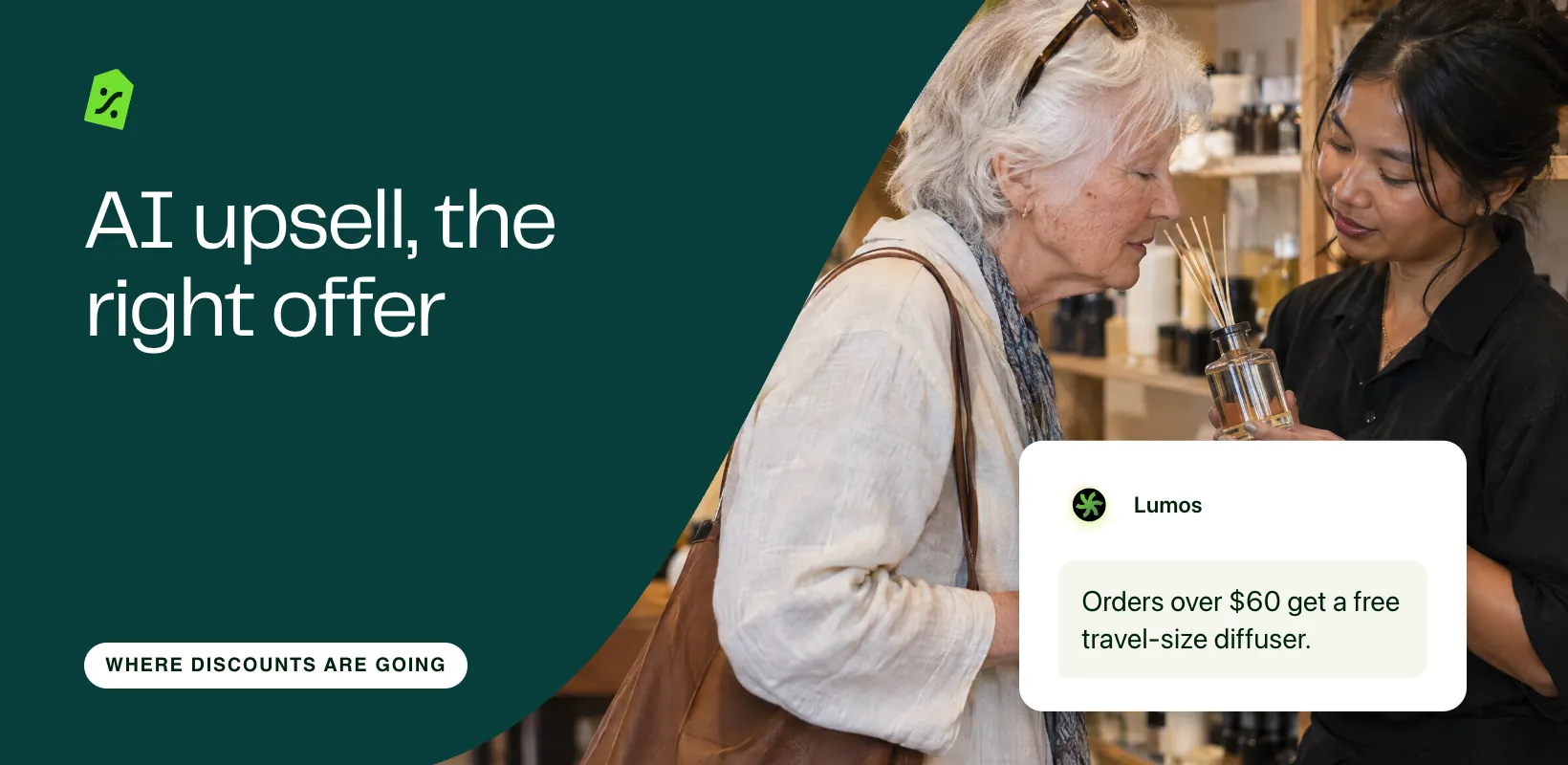
In Discounty: Buy X get Y See how Shopify Buy X Get Y offers work
Most upsell apps show the wrong offer because they choose it from the product or the cart alone, so every shopper on the same page sees the same suggestion. A behavior-based upsell, often sold as an AI upsell, chooses from what the shopper has done: what they bought before, what they looked at, what they removed. The difference matters most for repeat customers, because a store knows the most about them.
How do most upsell apps choose an offer?
From a rule or from the catalog. "Customers who view this product see that product." "Show the three best sellers." "Add the matching case to any phone." The rule looks at the product, not the person.
Two shoppers on the same product page get the same suggestion, even if one is comparing prices for the first time and the other has bought from you five times. Shopify's own Search & Discovery app works this way: it generates related products automatically for each product, and complementary products are the ones you choose by hand.
What is a behavior-based upsell?
An offer chosen from what this shopper has done. The signals a store can use:
- Order history: a first order, a fifth order, a lapsed customer.
- What is in the cart: close to a free shipping threshold, or one item short of a quantity break.
- What they viewed: several premium items, or only sale items.
- What they removed: an item taken out of the cart is a signal about price.
An "AI upsell" app uses a model to weigh these signals and pick the offer. The model can only use what the store records, so collecting the data is the first step.
Does personalization actually raise revenue?
The best-known numbers come from consultancies, so read them as a range.
- McKinsey's Next in Personalization 2021 report found that 71% of consumers expect companies to personalize, and that personalization most often lifts revenue by 10% to 15%, with company results from 5% to 25% depending on sector and execution.
- The often-quoted "35% of Amazon purchases come from recommendations" comes from a 2013 McKinsey article that gives no method. Anuj Kumar of the University of Florida, who studies product recommendations, calls such estimates hard to believe; his own field study with a department store found recommendations raised product sales by about 11%.
Use them as a reason to test. On a small store, a lift of a few percent can take weeks of orders to tell apart from normal ups and downs.
What does a store need before it personalizes an offer?
- Customer segments. At minimum: first-time buyers, repeat buyers, and customers who have not bought in a while. You build these in Shopify from customer data.
- An offer for each segment. A first-time buyer may need a reason to try; a repeat buyer may want the larger size or the matching item.
- A way to measure. Run the segmented offer against a plain one for the same period and compare orders, order value and margin.
How do you run segmented offers on Shopify with Discounty?
Discounty does not read browsing behavior or let a model pick a different offer for each shopper. Its AI assistant, Lumos, helps you set campaigns up. What Discounty does is aim an offer at a customer segment:
- Buy X get Y gives a free or reduced item with a qualifying purchase, such as a gift for repeat buyers only. Lite plan and up.
- Quantity discount and Cart goal reward a bigger basket. When limited to a segment, the discount applies only to that segment, though the tier table on the product page still shows to every shopper.
- Customer segment targeting on Quantity discount, Cart goal, Buy X get Y, Shipping discount and Advanced discount code campaigns is on the Discounty plan and up. Segments are Shopify's own. On an automatic campaign they only reach logged-in customers, because a guest belongs to no segment; a code campaign checks the segment by the email entered at checkout.
For example, a Buy X get Y campaign set to Minimum spend amount, with All store as the qualifying products, can give a free travel-size item on orders over $60. Limit it to a segment of logged-in repeat customers. A separate Shipping discount for all customers then covers every shopper, including guests.
To undo it, deactivate the campaign. It shows as Reverting while Discounty removes the discount.
Questions
What is AI upsell in ecommerce?
An upsell where a model chooses the offer from what the shopper has done, such as earlier orders and items viewed, rather than from a fixed rule about the product.
Why do most upsell apps show the wrong offer?
A rule-based upsell reads the product or the cart and nothing else, so a first-time visitor and a five-time customer see the same suggestion.
What is a behavior-based product recommendation?
A suggestion chosen from a shopper's own actions: what they bought, viewed, added or removed.
How do I increase my upsell conversion rate?
Show fewer offers, aimed at a segment, at the point where the shopper is deciding. Then measure each one against a plain offer before you keep it.
 What Is Agentic Commerce? A Guide for Shopify
 Do Shopify discounts work in ChatGPT and AI checkouts?